

Nuclear Research Reactor [FEL-1] Feasibility Study
GIEMS is leading a Front-End Loading 1 (FEL-1) feasibility study to assess the potential deployment of a nuclear research reactor at the University of Saskatchewan's Saskatoon campus.
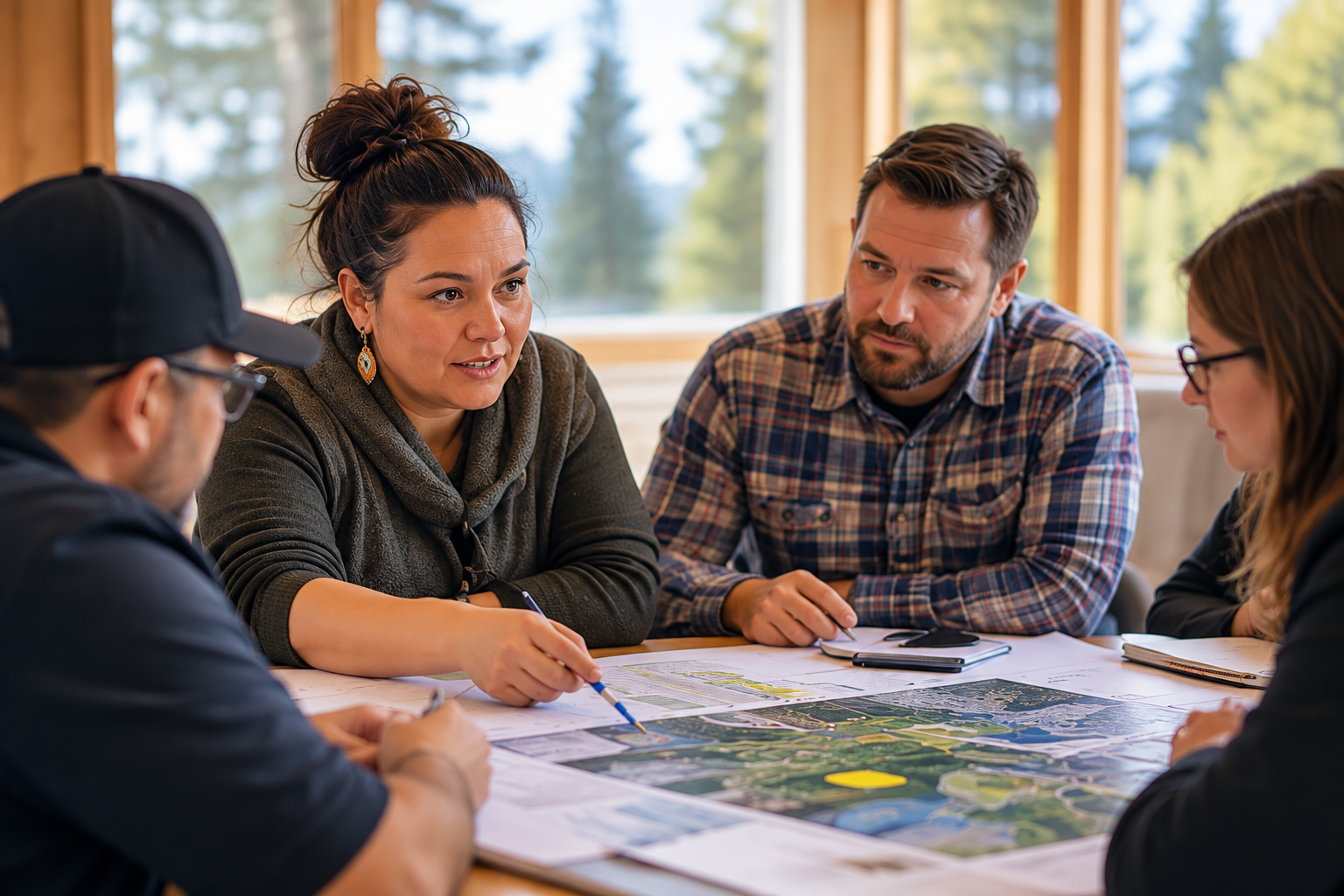
Conceptual image for illustrative purposes.
About the Study
The study will examine the technical, environmental, Indigenous, societal, business, economic, research, testing, and training considerations associated with a potential facility. Its purpose is to develop the preliminary evidence needed to determine whether the potential project should advance to FEL-2 for further scope development.
FEL-1 is an early-stage feasibility assessment. It is intended to identify key requirements, opportunities, constraints, risks, and information gaps associated with a potential nuclear research reactor and to develop preliminary information to support future decision-making.
No specific reactor technology, size, or configuration has been predetermined. The study will consider potential options against the research, testing, training, infrastructure, regulatory, operational, and other requirements identified through the FEL-1 work.
GIEMS is leading the study and is responsible for overall project management, coordination, integration of findings, and final FEL-1 reporting. Specialized expertise will be procured to support four complementary areas of assessment.
What the Study Will Assess
As part of the FEL-1 study, GIEMS will draw on specialized expertise across four areas to help assess the feasibility of a potential nuclear research reactor.
01
Technical
The technical assessment will examine potential reactor technologies and configurations, siting and campus integration, infrastructure requirements, regulatory and licensing considerations, safety, fuel and waste considerations, and preliminary cost and schedule requirements.
02
Indigenous, Environmental & Societal
This work will consider environmental and land-use factors, Indigenous perspectives and knowledge, broader community and societal perspectives, and the interests and input of relevant rightsholders, stakeholders, and communities. It will also identify engagement and assessment considerations that may be relevant to any future phase of work.
03
Business & Economic
The business and economic assessment will examine potential operating models, lifecycle costs, workforce and training requirements, maintenance, campus integration, utilization and revenue considerations, and long-term sustainability
04
Research, Testing, & Training
This work will assess potential demand and utilization across Saskatchewan's post-secondary and research environment, including potential research, testing, and training applications, user requirements, integration with existing research infrastructure, and the conditions required to support credible future activities.
Understanding FEL-1
FEL-1 is a feasibility and due-diligence exercise. It is intended to develop the preliminary information needed to determine whether there is a viable basis for a potential nuclear research reactor project and whether further scope development should be considered.
No decision has been made to proceed with a nuclear research reactor. FEL-1 is intended to inform future decision-making and does not presume that the potential project will advance to FEL-2. No reactor technology, size, or configuration has been predetermined, and procurement of professional services for FEL-1 is separate from any future procurement that could arise if the project advances.
Engagement & Societal Perspectives
Engagement is a substantive component of the FEL-1 study and will be undertaken through the dedicated Indigenous Engagement, Environmental, & Societal Assessment workstream.
This work will provide opportunities to gather input from relevant rightsholders, stakeholders, and communities and consider Indigenous perspectives and knowledge alongside broader community and societal perspectives. The approach to engagement will be developed as part of this workstream, recognizing that different participants have different roles, interests, and relationships to the matters being assessed.
GIEMS' general communications and information-sharing about the FEL-1 study are separate from this structured engagement work.
Procurement
GIEMS will competitively procure specialized expertise to support the study through four Request for Proposal (RFP) work packages:
01
Specialized Technical Expertise
Indigenous Engagement, Environmental, & Societal Assessment
02
03
Business & Economic Assessment
04
Research, Testing, & Training Assessment
EXPECTED POSTING
October 2026
The RFPs are anticipated to be posted publicly through SaskTenders in early October 2026. Once posted, links to the procurement opportunities will be available here.
All procurement-related questions must be submitted through the formal SaskTenders process identified in the applicable RFP.
Procurement
Procurement
⟶
Contract Award & Study Commencement
⟶
Assessment & Integration
⟶
FEL-1 Completion
↓
Consideration of Findings
The FEL-1 study is expected to be completed in Spring 2027. Any activity beyond FEL-1 will depend on the findings of the study and a subsequent decision on whether the potential project should advance to further scope development.
Stay Informed
GIEMS will continue to provide factual updates as the FEL-1 study progresses. Procurement opportunities will be posted through SaskTenders, and significant project updates will be added to this page as appropriate.
Frequently Asked Questions
-
Front-End Loading (FEL) is a staged project-development process used to progressively define and assess a potential project before significant decisions or commitments are made. FEL-1 is the earliest stage, focused on establishing an initial understanding of feasibility, identifying key requirements and uncertainties, and determining whether there is sufficient basis for more detailed work.
For the Nuclear Research Reactor FEL-1 Feasibility Study, GIEMS will bring together preliminary findings across technical; Indigenous, environmental, and societal; business and economic; and research, testing, and training considerations. This work will help determine whether there is a viable basis for a future nuclear research reactor project at the University of Saskatchewan's Saskatoon campus and whether it should advance to FEL-2 for further scope development.
-
GIEMS convenes post-secondary institutions, industry, governments, and communities to coordinate research, innovation, and training across energy, minerals, and society. Part of that role is bringing together the expertise and perspectives needed to examine emerging opportunities that could contribute to Saskatchewan's research, training, and innovation capacity.
The Nuclear Research Reactor FEL-1 Feasibility Study provides a structured way to determine whether nuclear research reactor infrastructure could have a viable role within Saskatchewan's research, testing, and training environment. GIEMS is leading and coordinating the study, supported by specialized expertise across technical; Indigenous, environmental, and societal; business and economic; and research, testing, and training considerations. The findings from these areas will be integrated to build a comprehensive understanding of feasibility and inform whether further scope development should be considered.
-
The University of Saskatchewan’s Saskatoon campus is the potential location being assessed through the FEL-1 study. This provides a defined institutional and site context in which to examine the requirements and considerations associated with potential nuclear research reactor deployment.
While the potential location is at USask, the study is broader than the needs of a single institution. In particular, the research, testing, and training assessment will examine potential demand, applications, and user requirements across Saskatchewan’s post-secondary and research environment and consider how a potential facility could interact with existing research infrastructure.
-
The FEL-1 study will assess feasibility across four interconnected areas: technical; Indigenous, environmental, and societal; business and economic; and research, testing, and training.
Together, these areas will examine what would be required for a potential nuclear research reactor to be technically feasible, appropriately informed by Indigenous, environmental, and societal considerations, operationally and economically sustainable, and responsive to potential research, testing, and training needs.
GIEMS will bring the findings from these areas together as part of the overall FEL-1 assessment. This integrated approach is intended to provide a more complete understanding of feasibility rather than considering any one aspect in isolation.
-
The FEL-1 study is an early step in determining whether there is a viable basis for a future nuclear research reactor project at the University of Saskatchewan. Its purpose is to develop the preliminary evidence needed to understand feasibility and determine whether further scope development should be considered.
The findings from FEL-1 will inform what happens next. If the study supports further development, a subsequent FEL-2 phase would involve more detailed scope development and assessment. Progression beyond FEL-1 is therefore conditional on the findings of the study and subsequent decision-making.
-
Yes. Understanding broader community and societal perspectives is an important part of assessing the feasibility of a potential nuclear research reactor.
The Indigenous Engagement, Environmental, & Societal Assessment will include opportunities to gather input from relevant rightsholders, stakeholders, and communities as part of the FEL-1 study. The work will consider Indigenous perspectives and knowledge, broader societal perspectives, and environmental and land-use considerations and will help identify issues, opportunities, and areas requiring further assessment.
The approach to engagement will be developed as part of this workstream, including consideration of how different rightsholders, stakeholders, and communities should be appropriately engaged.
-
GIEMS is leading and coordinating the FEL-1 study and will procure specialized expertise through four independently competed Request for Proposal (RFP) work packages:
Specialized Technical Expertise
Indigenous Engagement, Environmental, & Societal Assessment
Business & Economic Assessment
Research, Testing, & Training Assessment
The four workstreams will contribute specialized findings and expertise to the overall study. GIEMS will integrate the findings across the assessment areas and retain responsibility for overall project management and final FEL-1 reporting.
The RFPs will be posted publicly through SaskTenders. All procurement-specific questions and communications will be managed through the formal SaskTenders process.
-
The FEL-1 study is expected to be completed in Spring 2027.
The work will proceed through procurement and contract award, study commencement, assessment and integration of findings, and completion of the final FEL-1 study. The findings will then inform consideration of whether further scope development should proceed.
Any activity beyond FEL-1 will depend on the study findings and subsequent decision-making.