
Western Canada Nuclear Talent Hub Advances Following Spring Workshop
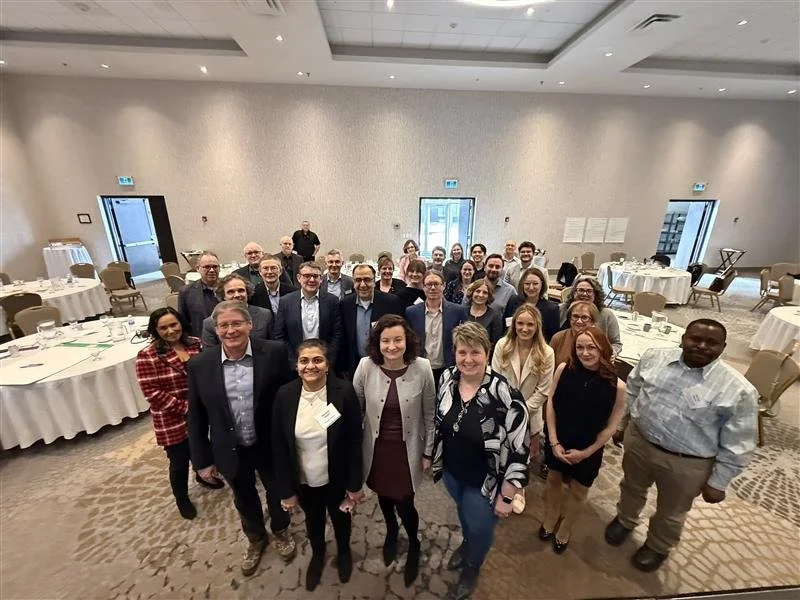
Western Canada Talent Hub Workshop Participants, Calgary, AB
Following the Western Canada Nuclear Talent Hub Workshop held earlier this spring in Calgary, partners from across academia, industry, and government are advancing a coordinated approach to nuclear workforce and ecosystem development in Western Canada.
The workshop brought together representatives from post-secondary institutions, utilities, government, and industry to examine the scale and structure of workforce, training, and system requirements needed to support the deployment of nuclear energy across the region. Discussions focused on aligning existing capabilities with emerging needs, while identifying opportunities to strengthen coordination across jurisdictions and institutions.
A key outcome of the session was the establishment of a shared framework to guide next steps.
Participants identified priority areas of focus spanning education and training, outreach and public awareness, regulatory and legal frameworks, and safety. These areas reflect both immediate workforce needs—such as skilled trades, regulatory readiness, and technical expertise—as well as longer-term requirements including STEM development, interdisciplinary training, and public and Indigenous engagement.
Leads have now been identified for each focus area, and working groups are being formed to advance this work through more detailed planning and implementation.
GIEMS will lead the Safety focus area. This work will support the identification of institutional and system-level expertise required to meet regulatory expectations, including licensing processes governed by the Canadian Nuclear Safety Commission, and to ensure safe deployment, operation, and long-term management of nuclear energy systems.
The discussions also emphasized the need to build a cohesive regional model—one that connects people, programs, and opportunities across Western Canada while supporting Indigenous partnership, local workforce development, and long-term sustainability.
As working groups begin to take shape, this effort marks a transition from initial alignment toward coordinated action. Further updates will be shared as the initiative continues to evolve.